Showing posts with label good reads. Show all posts

Wednesday, June 4, 2014

Book Reviews: The Good, the Bad and the Really Really Ugly

Downtown Chula Vista, as it was

My first professionally published piece of writing was a book review, and this is how it came about: back in the 1960s, the Chula Vista Star-News, a heavily subscribed twice-weekly broadsheet newspaper serving a community of about 30,000 people, posted an announcement that they were looking for a book reviewer. My mother saw the announcement, mailed the editor a copy of a book report I wrote (actually, this bears a striking similarity to how I ended up in the US Army, but that's another story), and it was not long until the report was published and I received an invitation from co-publisher Lowell Blankfort to visit him at his home in bucolic Bonita. My father had to drive me up a winding hill, past the exclusive and isolated houses to Lowell's estate near the summit. There, he officially informed me I had been hired as the Star-News' book reviewer, that I was expected to review 3-5 books weekly, and that he was sure that this experience (i.e., no pay) would greatly expand my abilities as a writer and journalist. Then he threw open his cupboard, which contained review copies of books sent by publishers all over the country, and told me to take all I could carry. That weekly appearance in the newspaper brought me some notoriety at school, sometimes helped me with my English teachers, and taught me about writing on a strict schedule in a limited space. By the time I gave up the job a few years later, I had reviewed more than 600 books.

Fast-forward to now. The Star-News is still published, Chula Vista has a population of 250,000, but the newspaper is free and no longer has a book section. Most community newspapers these days have either vanished or become free publications, supported by a mostly unpaid staff and cheap rates to local advertisers. Book reviews, once seen as a social imperative, have become a luxury they can no longer support because book reviews generate no revenue. This is also true in larger newspapers where once stand-alone book review sections have been either incorporated into "Lifestyles" or done away with entirely. In the cutthroat world of newspaper economics the bean-counters who call the shots point out that books generally appeal to an older and more elite readership, not a group they want to consider in this demographic-driven age. When the San Francisco Chronicle drastically cut its book review section, the move brought a paltry 400 complaints.

At one time, most books carried snippets from newspaper book reviews on the front and/or back covers. If it was a mystery, you could almost be certain it would carry a blurb from the San Diego Union, because that newspaper once had an entire section of mystery and detective book reviews by veteran mystery writer Robert Wade. Now, you're much more likely to find a cover blurb from another writer or a reader with name recognition who was given an advance copy. Now, it's rare that any book not written by a best-selling or "celebrated" writer will get a mention in the atrophied and increasingly irrelevant newspapers of the 21st Century. When people read a book review these days it's usually from one of the numerous book-oriented blogs, some website like Library Thing or Good Reads, or that bastion of literary good taste and erudite opinions...Amazon.

I've seen many people write that they will not buy a book on Amazon till it has at least five reviews. However, it is my experience that before I can use a review on Amazon (or any other other site for that matter) to evaluate a book, I have to evaluate the reviews themselves. Sadly, most of the reviews published are not worth the electrons they are written with. Thus we get...
  • "I don't know why I bought this book, but I wouldn't buy it again. Otherwise it was okay, I guess."
  • "Best book ever! But since I have to write at least twenty words before the review can be posted on"
  • "Hated it, and if you don't like that don't ask me to write a review again."
  • "As I read this book I imagined the author, if you want to call him that, flouncing around the basement of his mother's home in his pyjamas, from time to time coming to his computer like a butterfly to a flower, typing another precious word, taking a sip from his mug of hot coco, then then returning to his prancing as he waits for mommy to tell him his waffles are done."
  • "I liked this book, but I don't know why. I think you'll like it too."
  • "I'm giving this book one star because I couldn't download it in my country."
  • "I bought this book but never got around to reading it."
The demise of newspapers and the rise of the Internet has democratized the book review. While that means giving a soapbox to every screwball, knucklehead or nutter with an ax to grind or a character to assassinate, or who just want to see their names in print, it also means that many intelligent, insightful and well-spoken people now have a venue to express their opinions about the books they love, the books they hate, and the books they love to hate. If you can disregard the bottom-feeding reviewers and the sock-puppets of poor writers (they are obvious), then reading the worthwhile reviews gives you something not possible back in the age of newspapers--a consensus of opinion. Personally, I like that the Internet has freed me from the tight limits of the newspaper column, and I can say a bit more about books that deserve the effort.

In 50 years of publishing in print and on the Internet I've written thousands of book reviews. I don't hold up my own efforts as a template to anyone, but, like everyone else in the world, I tend to measure others by my own yardstick. I try to put into my own book reviews what I would hope to see in the reviews of others:
  • What is the basic theme of the book, or what is the author trying to say?
  • What genre is the book?
  • Without giving spoilers, what is the book about?
  • What's interesting about the setting and/or characters?
  • What insights can you give me about the book or its author?
  • Why did you like (or not like) the book?
  • Is this book part of a series, and how does it measure up?
  • How well written is the book?
  • Was the book a satisfying read?
  • What audience will this book appeal to?
  • Do you recommend it?
Of course, that's just a partial list and not every point is going to be appropriate for every book. Just as you hold a history book to a different set of standards than you would an historical novel, so different books require different approaches when reviewing them. For example, my review of Brian Ritt's excellent Paperback Confidential is very different than reviews I gave to Lawrence Block's Grifter's GameDavid Goodis' Night Squad or Say It With Bullets by Richard Powell, all books written by authors profiled in Brian's indispensable book. However, no matter the book, no matter the genre, no matter the author, when a reader finishes one of my reviews, he will have a pretty good idea what the book was all about, why I liked a book or not, and whether he wants to invest the time, energy and money to read it for himself. And that's nothing less than what I want when I read someone else's review.

Monday, December 30, 2013

A Year of Books

Books have always been a large part of my life. Always had my nose in a book, as my mother used to say, and usually spent my allowances on books. Near sixty years and I still have yet to get my nose out of books. People at school, in the Army, at work, always seeing me with at least one boom at hand (and a few more stuffed into pockets) would usually come around to the same question: how many books do you read in a year? I never really had a good answer, except, maybe, "Lots." In this digital age, when people have all but forgotten how to read an analogue clock, such answers are no longer acceptable. After all, we have websites and software to keep track of things like that. And since I belong to Good Reads, and regularly review books as I finish them, all my stats are regularly toted for me by the Great Machine:

2013
Number of Books read -- 148
Number of Pages Read -- 35,739

Well, it's as impressive as it is appalling, I suppose, but even that does not tell the full story. It does not include all the magazines read, or, for that matter, all the anthology stories read from books piled around me all the time, or the odd book picked up and read simply because it was at hand and I had to have something to read. So, what did I read this year?


1888: London Murders in the Year of the Ripper revealed there was much more going on in London than just the Jack the Ripper murders, and the author drew uneasy parallels between that time and ours.

I enjoyed a score of articles about my beloved movie serials in Blood 'n' Thunder's Cliffhanger Classics, which introduced me to many silent serials of which I knew little.

The diminutive pundit Greg Gutfield skewered the "phony outrage" that is pandemic in our society. 


Arch-conservative and smartest-guy-in-the-room William F. Buckley Jr gave me a moving and insightful testament into the nature of faith in Nearer, My God.

One of the best books I read this year was Paperback Confidential, which studied writers active in the original paperback market in the mid-century.

Another highlight for me was Rin Tin Tin: The Life and the Legend, in which a German Shepherd puppy is found in the midst of battle by the right person at the right time...to save them both.


I've always had a love for the Greek legends, so I was glad to accompany Ernle Bradford as he trekked about the Mediterranean in search of crafty Ulysses.

It's back to London's good old bad old days with The Victorian Underworld, and, again, it's disconcerting to see how much like our own world theirs was.

Also disconcerting was Pam Funke's fictional look on the Apocalypse and the Anti-Christ in her series of books, of which The World at War is the second.


The Memory of the Blood was just one of the several Bryant & May books I read this year. The two detectives are even older than me, and always present hidden aspects of London.

Although I enjoy my foreign detectives, nothing beats The American Private Eye, and in this book the author takes a close look at all the major ones, and most of the smaller important ones.

Because I enjoyed the Nero Wolfe books as written by Rex Stout so much, I made a concerted effort to steer clear of the series as carried on by Robert Goldsborough. However, when he wrote Archie Meets Nero Wolfe I just could not help myself...and I was not disappointed.


The Country Diary of an Edwardian Lady has to be one of the most beautiful books I have ever read, with its lovingly detailed paintings of the flora and fauna or a year in the country.


I can't let a year go by without reading one of Clive Cussler's adventure novels, and 2013 was no different. Of the several I read, Crescent Dawn was one of the most thrilling.


Of all the mystery series set in the UK, one of the most endearing is MC Beaton's tales of Hamish Macbeth, a copper in the Scottish Highlands. In addition to the usual cast of characters, we have in Death of a Kingfisher two lovely children who make the "Bad Seed" look like a girl scout. Creepy.


I really can't let a year go by without finding some sleazy paperback I've never read before. While Fatal in Furs was not the sleaziest paperback of 2013 for me, it was still very satisfying.


The French has their own way of writing crime novels, especially when the Frenchman involved is from Italy. This book had crime, treachery, the Vatican and the Mob...who could ask for more?


This year saw a big return to the pulps for me. Stories which have been lost for decades are now finding new life, most because of the technology of print-on-demand which makes it economical to have a print run of even a single book. Lester Dent's stories involving airships and H. Bedford-Jones' tales of two adventurers in the Orient were just two of my forays into pulp fiction this year.


 And I finally got around to reading Zane Grey's The Rainbow Trail, sequel to his very famous Riders of the Purple Sage. Though out of step with modern styles and sensibilities, I enjoyed this western romance very much, and it was just one of several westerns for me this year.


It seems I cannot go a year without reading something connected to Sherlock Holmes, and of the SH books for 2013, Resurrected Holmes was certainly the most unusual. The idea behind the anthology was that notes for stories never written by Watson were given to other famous writers. The results range from perceptive to comic to bizarre. Most enjoyable!


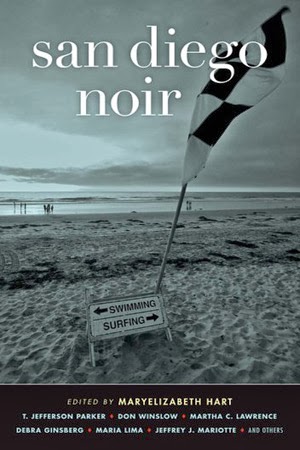
The only disappointment in this anthology is that there were no noir stories set in my Chula Vista. Other than that, an admirable entry in the long-running series of geographically themed noir.


I only knew Donald Keyhoe through his popular writings about UFO's, so I was very surprised to find out he was a very prolific writer during the pulp era. These books were very enjoyable and revealed very strange aspects to the Great War.


In The Island of Lost Maps, we find a terrible sort of criminal, terrible at least to bibliophiles, for it centers on those who travel from library to library, ripping maps from rare books to sell to collectors.

Certainly not all the books I read in 2013, or even a fair representation, but just a few of the books I enjoyed most. And quite a few of them made their way to me through the Good Reads website in the form of suggestions made because of others books I read. If you don't already belong, you might want to consider it. It has suggestions, forums, giveaways...but more than that, it's fun.

Tuesday, March 26, 2013

Dust Off Your Classics!


When my kids were still in school (so very long ago), I would mention to them from time to time to be sure to read books of their own choosing, and to judge books on their own merits using their own judgement. I also told them occasionally not to let other people (i.e., teachers) make decisions for them; the corollary to that, of course, is: "Don't be put off any book just because a teacher tells you that it is good or great, and definitely do not let the term classic be the kiss of death for an author whose greatest sin is trying to tell you a good story." I think that's really good advice for us all, and now Diamond Cronen, of the Dee's Reads book blog, and Bookish Trish, of the Between the Lines blog, have issued a challenge to all readers -- "Dust Off Your Classics!"

Dee's Reads
Between the Lines
So, why should you add a single classic to your to-be-read list, much less the six that the challenge calls for? That's not really as complicated as you might think, at least from my point of view. To me, you read a so-called "classic" for the same reason you would any other book -- to be a better person (literate people are not ignorant or uninteresting), and because we all love a good story. But exactly what six books are you going to choose to as your answer to the challenge...now, that is complicated, for one person's classic is another person's potboiler, which is exactly what some of the books now considered classics were called (or worse) when first published. I'm going to list my choices below, and perhaps you'd like to share your own preferences; by the way, if you are an insatiable reader and are not registered with Good Reads, what's wrong with you?


Yes, you can count, and so can I. The 2013 Dust Off Your Classics Reading Challenge from Dee and Trish call for six, and I've listed seven. Sorry, I don't like even numbers.