Showing posts with label books. Show all posts

Sunday, October 30, 2022

Bedtime Stories

I am the first one to admit, I spend far too much time on YouTube. On the other hand, it is much less a time waster than Facebook (which I visit occasionally) or Twitter (which I abandoned completely because of the endless and ever-growing tide of liberal hate), and it is often a source of vital information. After all, where else are you going to find short, easily digestible videos about the important things in life--meteor impacts, steampunk music, model building, zombies, woodworking, dogs, UFOs, traffic accidents in Chula Vista, ancient, civilizations, volcanoes, comic books, the Fermi Paradox, abandoned shopping malls, silly rants, science fiction, the foibles of humanity, old TV series, Simulation Theory, and, of course, kittens?

Now and then, something I watch on YouTube leads me to a new book. I found out about The Three Body Problem on a channel called Quinn's Ideas...smart fellow, that Quinn. And all the hullabaloo about that terrible Rings of Power series (Amazon itself soured me with their own teasers, trailers and first fifteen minutes of the series) led me back to rereading LOTR after more than fifty years...overwritten, surely, but Tolkien's facility with the English language makes you wish he had overwritten more. From Gary Lovisi's channel, I learned about a novel featuring HP Lovecraft and Robert E. Howard as characters...a little embarrassing, that one, since it was published twenty years ago, and I should have known about it. And sometimes a channel leads me to an unexpected and pleasant surprise.

ISBN 979-8435530322

ISBN 979-8835857425

I've been a fan of the YouTube channel Bedtime Stories for several months. Despite the name, the stories they relate are not the kind of nighttime tales you want to tell your kids before they go to sleep, not if you actually want them to go to sleep. The fare offered touches upon aliens, ghosts, mysteries, unexplained phenomena, true crime, odd deaths and urban legends. They are delivered in a delightful English accent (Yorkshire?) and are accompanied by evocative art with some animated effects. The channel has been around for five years, so I have been slowly working my way through past episodes. In one of them, they mentioned the publication of two books, each containing forty stories previously presented to viewers.

I was hesitant when I heard the word "transcripts," but I took author Richard While at his word that the chapters were more than verbatim copies of the episodes. He was correct. The reader gets revisions, added information, further speculation, and, sometimes, corrections...no matter how thorough one may be in researching, authors are fallible creatures, but one of the strengths of Richard and his colleagues is that they never really close a case, always searching for more information as investigations turn up new data and witnesses.

The stories really are a mixed bag. In the first forty tales we have the high strangeness of "The Ikley Moor Alien," the historical conundrum of "The Flannan Lighthouse Mystery," the very disturbing case of "The Body on the Reservoir" from Brazil, and my favorite, "There is Something in the Woods." In Volume Two, we have "The Lair of the Wendigo," an examination of the folklore also used by Ambrose Bierce in his classic story; "Tales from Skinwalker Ranch," looking into Indian legends and UFOlogy; the urban legend of "The Manchester Pusher," which asks the question of whether a secret serial killer might haunt Manchester, England (much like the perhaps-mythical Smiley Face Killer in America, also covered by the channel); and "The Kentucky Goblins," a UFO/demon story near and dear to me since I used to live just a stone's throw from Hopkinsville in the 70s.

If you like mysteries, unsolved crimes, paranormal phenomena, UFOs, cryptids, urban legends, ancient folklore impinging upon modern life, or wonder why so many people vanish without a trace in the national parks of America, these books might be of interest. They are available in paperback and in less expensive e-book versions. I got the paperbacks, myself. As one reviewer noted, the books are easy to pick up, but hard to put down. Me? All I say is, don't read the stories at bedtime. 

Wednesday, July 6, 2022

The Book was...Different

 All of us who love both movies and books have made the comment at one time or another: "The book was better than the film." This usually happens when we hear that a book we really like is getting the Hollywood Treatment. Simultaneously, we are excited and terrified. Will the film be as good as the book? Will it contain everything we loved about the book? Of course, these days, when Hollywood (and other film capitals) seem intent on trashing the past, trampling on our beloved franchises, and fusing propaganda and entertainment, we often wonder, "Will the film be anything like the book?" Of course, we don't really need a struggling NWO to trample on books. Hollywood has been doing that for years.

I recall when the film World War Z was released. One review I read after its debut stated, "The film has everything you loved about the book's...title." At that time, I had not read the book, so I did not understand exactly what he meant. When I finally read the book, I understood. The film was forgettable overall, but I remember it had Brad Pitt in it and was shot in every exotic location willing to give the filmmakers a tax break. Alas, no underwater zombies or epic battles, just bland characters, silly situations and a quick fix to the world's end. Prior to penning World War Z: An Oral History of the Zombie War, Max Brooks wrote the satirical, yet extremely practical The Zombie Survival Guide, which I keep on the nightstand next to my bed...you know, just in case.

Not long after I read the survival guide, I had occasion to summon the police to help with a car parked across my driveway. That morning, I had had to drive the Wife's car down the sidewalk till I could pull onto the street so she would not be late for jury duty. When the officer arrived, he saw the problem and called a tow truck...as it turned out, the guy who drunkenly parked there had just got his car out of impound because it had been towed after blocking another driveway. While we were waiting for the tow truck, the officer noted I had a new driveway gate up by the house. He commented on how well built it looked, an improvement on the old gate it had replaced. I told him, "Well, yes, it is well built, but it won't hold off anything worse than a Zombie Level 1 siege." Without a pause, he replied, "Hopefully, it won't come to that, and perhaps the Zombie Apocalypse will pass Chula Vista altogether." Ah, ya gotta love the officers of the CVPD.


The Day the Earth Stood Still (1951) was a film that had quite an impact on me as a kid. Of course, I did not see it when it first came out, but did around 1959 or so. At the time I just accepted how it was portrayed on the small screen, and said "Klaatu barada nikto" ("Klaatu dead. Repair him. Do not retaliate") like everyone else who lives and dies by film quotes. It was not until years later that I discovered the basis of the film was a 1940 short story entitled "Farewell to the Master" by Harry Bates. It appeared in the October 1940 issue of Astounding Science Fiction (now Analog-Science Fiction/Science Fact), but I did not come across it till much later, in a 1994 Barnes & Noble anthology, Reel Future edited by Forrest J. Ackerman & Jean Stine. What do the story and film have in common? Not a lot, really. 


A spaceship (not a flying saucer) lands outside the Capitol in Washington DC, an alien named Klaatu emerges with a giant robot (Gort in the film, Gnut in the story), and Klaatu is shot. In the story, he dies, his body is placed in a mausoleum and the robot stands unmoving. In the film, the wound is not fatal, Klaatu hides in the general population and story goes from there, eventually ending as a warning against the Earth about the use of nuclear weapons. It's a well-made film, but it's really just a message film, tying its impact into a theme that was more important then than it is now. The story, however, is an "idea story," like many of the stories that emerged from Astounding SF in the 30s and 40s. The precipitating events (the landing and Klaatu's death) happen years prior to the start of the story, and we first see Gnut through the eyes of a reporter who, at night, sneaks into the museum built around the motionless 8-foot-tall humanoid robot. There, he sees the robot move, enter the ship and attempt to reconstruct Klaatu from a recording. The recording is flawed, so the new Klaatu dies (again) and the reporter provides a flawless recording so the robot can use it back home to bring Klaatu back to a stable life. Just before the robot heads back to the stars, the reporter asks him to tell his master, the new Klaatu, that the death was a terrible accident. The robot's reply: "You misunderstand. I am the master."


The Thing from Another World was another film that made an impression on me. Unlike The Day the Earth Stood Still, I did not see this one till much later in life, probably in my mid- to late-teens. As I watched it, I felt a strange sense of familiarity. I watched the scientists at an Arctic research station find a flying saucer that had been buried under the ice for a long time. I got a little chill as I saw them arranged in a perfect circle around the spaceship's circumference. Of course, I knew all about flying saucers because I was heavily into studying them, something that had fascinated me ever since seeing a circular craft in the night sky when I was about nine or so. When the scientists found the pilot frozen in ice and brought it inside the research station, the reason for the familiarity finally struck me--it was the same plot as a 1938 story called "Who Goes There?" by Don A. Stuart (John W. Campbell Jr). I settled back to watch the story I knew so well unfold...and was thoroughly disappointed. 


Now, don't get me wrong. The film is well-written, well acted and the photography is superb, but it is the story of a blood-drinking vegetable that ends up getting fried. In the story, the alien is a protean predator, highly intelligent and intent on getting out of the Arctic where it can use its shapeshifting powers and ability to reproduce asexually to displace humanity. The film's strength was in producing a claustrophobic horror, much as we experienced in the film Alien, which was based on an uncredited story by A.E. van Vogt. In the story, the focus is on paranoia. Because of its powers and intelligence, the alien can be anyone, from the sled dog to the fellow sitting next to you. I have always held the opinion, if you are going to base a film on a story, film that story, not something that is nothing like the story. Otherwise, just come up with an original script. Now, this was not the end of "Who Goes There?" and Hollywood, because it served as the basis for John Carpenter's 1982 The Thing. In this version, they get the creature's powers correct (very graphically), but the film...well, most people seemed to like it.

There's really no end to the number of films that wasted its source material, but I especially wanted to mention 1979's Moonraker, the 11th film in the James Bond franchise, and one of the worst films in that franchise, though it has stiff competition from Quantum of Solace, Spectre  and (most especially) No Time to Die. The odd thing about Ian Feming's Moonraker is that it is one of the best books in the series. What do the film and the book have in common? A title. That's all. What's different between the book and film? Everything. The moronic and insulting film is so vastly different that instead of re-issuing the standard movie tie-in of the original book, it was decided to hire Christopher Wood to write a novelization of his own insipid screenplay, though the title of the book was James Bond and Moonraker. It was claimed that the filmmakers did not moviegoers to be confused by the differences between the two. Personally, I think they did not want anyone to see how much better Fleming's book was than the film, which, somehow, went on to become the highest grossing film of the series until the superior Goldeneye came along. Just in case you wondered--no, I really did not like the film Moonraker.

Well, I hope enjoyed looking at some films that wasted their source stories. There are a lot more, and you probably have your own favorites. Now, that's not to say that there are not films that showed respect and fidelity to their source books. I can think of several. Hopefully, we'll get a change to take a look at a few of them.


Monday, March 7, 2016

Working for Books

People are appalled when I tell them my first real job paid $1.10/hour. I had had jobs prior to stuffing tacos for Taco Bell, but they really don't count. Mostly, they were day labor jobs or temporary gigs for specific tasks, such as one night inventorying LPs (remember them?) at White Front or doing odd jobs for the manager at Char-Burger. Even my summer job between high school and college doesn't count, since as a Fuller Brush Man (Boy, really, since I was 17) I earned, not an hourly wage, but a percentage of sales. As low as it seems today, the $1.10/hr I received from Taco Bell was the most money I had ever earned, and I got lunch and dinner free. I was able to pay my way through college, but more importantly I was able to buy books...isn't that really why we all work?


Back in those days, you could buy a sack of tacos and still get change from your dollar bill. I thought it was the end of civilization as we knew it when Ron, manager of Taco Bell #17, told me we were raising the price of a taco from 13 cents to 15 cents. "Who's going to pay that much for a taco?" I cried. Well, as it turned out, anyone who wanted a taco would pay that much. And if you didn't want a taco you could always get two pieces of chicken and a biscuit for less than a dollar, or two hot dogs and fries from Wienerschnitzel, around the corner from us, for about four bits. At the time the gas I put in the car was 17 cents/gallon (though once it dropped to 13 cents, but that was during a gas war, the kind that did not involve the Middle East), so earning $1.10/hr was not nearly as bad as it might seem today.


But back to books. At the time, some paperback books had increased their cover price to 35 cents, but most of the books in the racks (remember those revolving racks in newsstands and drug stores?) were still only a quarter. And comic books were still 12 cents, though there were rumblings of a change to 15 cents...yes, the end of civilization as we know it. The digest detective and science fiction magazines were 40-50 cents, but that was only a monthly expense. And it was still possible to get paperbacks, magazines and comics for only a nickle or a dime at used book stores.

So, there I was, earning $1.10/hr, no longer dependent upon the largess of my parents, who really didn't approve of me reading so much anyway. With my minimum wage pittance, I could get nine comic books, or three 35-cent books, or four quarter books, or a magazine and two books, or...well, you get the idea. I had $1.10 in my pocket, and I was in book-lover's heaven.

Fast forward to modern times. With $1.10 in my pocket, there really isn't much I can do anymore. With the demise of the "dollar menu" at fast food places (which cost more than a dollar anyway) I would starve. I could get a digest magazine, if I had four more dollars, not that there is much to choose from...there were more than a couple of dozen then, only five now. You can't get a paperback for less than $9.99, for the most part, and books don't even fit in the old spinner racks anymore...they're as hard to find as bookstores these days. And comic books? Don't get me started.

But, you may argue, times changes. Prices may have gone up, but so have wages. Your current minimum wage worker can buy one magazine or two comic books (maybe), but must forget about that paperback until he's worked another hour. To get all that I could before, I'd need a job that paid at least $40/hr. Good luck on that. I'm glad that I kept most of my old books (darn that garage sale my mother held!) and bought books on the cheap when I could. Now that I'm retired, money is scarce, but I have plenty of time to read. That investment has paid a handsome dividend...unlike tacos, books don't have expiration dates.


Thursday, October 2, 2014

Shedding Books...Reluctantly

For everyone who collects, accumulates or hoards books, there eventually comes a point where you have to shed books. No doubt, if you fall into one of those three categories, you have changed residences at least once in your life, meaning you already know what it's like to lose friends and/or family. The last time I moved (which was the last time I moved), my father was one of the people who foolishly volunteered to help. After about the twentieth, maybe it was the twenty-fifth, box of books, he looked at me and said: "If you move again, Chula Vista is going to see its biggest bonfire...ever." Maybe he was just kidding, or maybe his back was hurting and he was feeling a little cranky--well, he is slightly older than I am, or used to be before my last birthday--but I decided not to take a chance, and have not moved since. Of course, losing friends and family is one thing, but losing books is another.

Arimintha's Complaint

Regular readers of this blog (I'm sure there must be a couple) will remember a similar complaint from Arimintha, our favorite playwright and game designer. Her reasons were valid and her solution very much a product of 21st Century technology (Kindle), but she did have to shed some real books, a process repeated very recently when she moved yet again, this time to beautiful and quiet Panorama City. The upside to all her moves is that with each relocation I receive books she previously "borrowed," and some new ones as well. I figure, two or three more changes of address and I might actually get back almost all the "borrowed" books. And, then, there's that whole Man, Myth & Magic set that takes up so much room...hint.

There have been two times in my life in which books have flowed out of my library rather than in, both a long time ago, the first time involuntarily, the second...well, not exactly voluntarily, but I had no other choice. The first time was when I enlisted in the US Army. I stored all my books with my mother (books [bunches], sci-fi & mystery magazines [lots], and comic books [lots more!]) and thought they were safe. Little did I know then, but not long after I boarded the bus for Los Angeles, Chula Vista was the site of an epic yard sale. Yes, painful when I found out, but you can't hold a grudge, not against your mother...well, not for more than two or three years.


The second time was in the 1980s, and was actually more painful than the first because I had to do it myself. I suppose if I had to describe it, it would be, maybe, self-surgery, like hacking off a limb or plucking out an eye, no anesthesia. If you've had to get rid of books, you already know what it's like, so there's no point in rehashing it. How did it happen? Hired away from a book company by firm of naval architects, only to be laid off six months later, and there you go. You think another job is around the corner, then the next corner, and the next, and the next...well, as it turns out, it's just corners, no jobs, and then you're standing on a corner with a tin cup. Nope, didn't do that...too much pride, same as what keeps a person from tying his life to the government dole (once they have you, they don't let go). Times were tough, I didn't have any prospects, but I did have books, lots of them (I restocked after that whole mother-yard-sale thing) and some were collectible.


By the time I finished going through my shelves, I had two paper bags full of books that I could lose without pain...well, not unbearable pain. All I had to do to follow through with my plan was to think of my family. Despite my rampant bibliomania (a "gentle madness" it's called) I really do value my family more. With my two bags of books in arm, I took the bus downtown and made my rounds of the bookstores. My first jaunt to downtown San Diego had been more than twenty years earlier to find several dozen bookstores, from vast emporiums to tiny hole-in-the-wall places sandwiched between sleazy bars and gritty tattoo parlors. This time, however, I found only a handful of survivors of those halcyon days, most being kept afloat, not by the reading public but by the collecting elite. Somewhere along the way, reading had become a lost art, a trivial and foolish waste of time.

Since reading was no longer a recreation of the masses, a few "common" books went back home with me. The others were collectible enough to warrant offers from booksellers, some of them at least. Most sellers were no longer buying because the marketplace was dying, but a few stores justified my long and depressing trip downtown. By the time I finished, I had three checks in my pocket and a half-dozen books I was glad to take home. I cashed the checks at a bank downtown, took the thirty pieces of silver, and waited for the bus home. Of course, things have changed downtown over the ensuing three decades, most notably in number of bookstores. Now, there are none; they have all gone under, though one did go up in smoke. And to make the transformation of downtown complete, the bank where I cashed the checks (showing my library card as a second ID) is now a hotel and most of the bars and tattoo parlors have been replaced by parking lots and empty government-subsidized buildings.

But, as I wrote earlier, if you yourself are a collector, accumulator or hoarder, you already know what this is like, the pain of shedding books, the depression as you look at the small stack of bills in your hand. No matter what you received, it isn't enough, and will be gone far too soon. Personally, I try not to think about how much money I did or didn't receive. Instead, I choose to console myself with the knowledge that two bags of books (minus a half-dozen) bought eight bags of groceries...but I still do miss the books.

Wednesday, June 4, 2014

Book Reviews: The Good, the Bad and the Really Really Ugly

Downtown Chula Vista, as it was

My first professionally published piece of writing was a book review, and this is how it came about: back in the 1960s, the Chula Vista Star-News, a heavily subscribed twice-weekly broadsheet newspaper serving a community of about 30,000 people, posted an announcement that they were looking for a book reviewer. My mother saw the announcement, mailed the editor a copy of a book report I wrote (actually, this bears a striking similarity to how I ended up in the US Army, but that's another story), and it was not long until the report was published and I received an invitation from co-publisher Lowell Blankfort to visit him at his home in bucolic Bonita. My father had to drive me up a winding hill, past the exclusive and isolated houses to Lowell's estate near the summit. There, he officially informed me I had been hired as the Star-News' book reviewer, that I was expected to review 3-5 books weekly, and that he was sure that this experience (i.e., no pay) would greatly expand my abilities as a writer and journalist. Then he threw open his cupboard, which contained review copies of books sent by publishers all over the country, and told me to take all I could carry. That weekly appearance in the newspaper brought me some notoriety at school, sometimes helped me with my English teachers, and taught me about writing on a strict schedule in a limited space. By the time I gave up the job a few years later, I had reviewed more than 600 books.

Fast-forward to now. The Star-News is still published, Chula Vista has a population of 250,000, but the newspaper is free and no longer has a book section. Most community newspapers these days have either vanished or become free publications, supported by a mostly unpaid staff and cheap rates to local advertisers. Book reviews, once seen as a social imperative, have become a luxury they can no longer support because book reviews generate no revenue. This is also true in larger newspapers where once stand-alone book review sections have been either incorporated into "Lifestyles" or done away with entirely. In the cutthroat world of newspaper economics the bean-counters who call the shots point out that books generally appeal to an older and more elite readership, not a group they want to consider in this demographic-driven age. When the San Francisco Chronicle drastically cut its book review section, the move brought a paltry 400 complaints.

At one time, most books carried snippets from newspaper book reviews on the front and/or back covers. If it was a mystery, you could almost be certain it would carry a blurb from the San Diego Union, because that newspaper once had an entire section of mystery and detective book reviews by veteran mystery writer Robert Wade. Now, you're much more likely to find a cover blurb from another writer or a reader with name recognition who was given an advance copy. Now, it's rare that any book not written by a best-selling or "celebrated" writer will get a mention in the atrophied and increasingly irrelevant newspapers of the 21st Century. When people read a book review these days it's usually from one of the numerous book-oriented blogs, some website like Library Thing or Good Reads, or that bastion of literary good taste and erudite opinions...Amazon.

I've seen many people write that they will not buy a book on Amazon till it has at least five reviews. However, it is my experience that before I can use a review on Amazon (or any other other site for that matter) to evaluate a book, I have to evaluate the reviews themselves. Sadly, most of the reviews published are not worth the electrons they are written with. Thus we get...
  • "I don't know why I bought this book, but I wouldn't buy it again. Otherwise it was okay, I guess."
  • "Best book ever! But since I have to write at least twenty words before the review can be posted on"
  • "Hated it, and if you don't like that don't ask me to write a review again."
  • "As I read this book I imagined the author, if you want to call him that, flouncing around the basement of his mother's home in his pyjamas, from time to time coming to his computer like a butterfly to a flower, typing another precious word, taking a sip from his mug of hot coco, then then returning to his prancing as he waits for mommy to tell him his waffles are done."
  • "I liked this book, but I don't know why. I think you'll like it too."
  • "I'm giving this book one star because I couldn't download it in my country."
  • "I bought this book but never got around to reading it."
The demise of newspapers and the rise of the Internet has democratized the book review. While that means giving a soapbox to every screwball, knucklehead or nutter with an ax to grind or a character to assassinate, or who just want to see their names in print, it also means that many intelligent, insightful and well-spoken people now have a venue to express their opinions about the books they love, the books they hate, and the books they love to hate. If you can disregard the bottom-feeding reviewers and the sock-puppets of poor writers (they are obvious), then reading the worthwhile reviews gives you something not possible back in the age of newspapers--a consensus of opinion. Personally, I like that the Internet has freed me from the tight limits of the newspaper column, and I can say a bit more about books that deserve the effort.

In 50 years of publishing in print and on the Internet I've written thousands of book reviews. I don't hold up my own efforts as a template to anyone, but, like everyone else in the world, I tend to measure others by my own yardstick. I try to put into my own book reviews what I would hope to see in the reviews of others:
  • What is the basic theme of the book, or what is the author trying to say?
  • What genre is the book?
  • Without giving spoilers, what is the book about?
  • What's interesting about the setting and/or characters?
  • What insights can you give me about the book or its author?
  • Why did you like (or not like) the book?
  • Is this book part of a series, and how does it measure up?
  • How well written is the book?
  • Was the book a satisfying read?
  • What audience will this book appeal to?
  • Do you recommend it?
Of course, that's just a partial list and not every point is going to be appropriate for every book. Just as you hold a history book to a different set of standards than you would an historical novel, so different books require different approaches when reviewing them. For example, my review of Brian Ritt's excellent Paperback Confidential is very different than reviews I gave to Lawrence Block's Grifter's GameDavid Goodis' Night Squad or Say It With Bullets by Richard Powell, all books written by authors profiled in Brian's indispensable book. However, no matter the book, no matter the genre, no matter the author, when a reader finishes one of my reviews, he will have a pretty good idea what the book was all about, why I liked a book or not, and whether he wants to invest the time, energy and money to read it for himself. And that's nothing less than what I want when I read someone else's review.

Monday, December 30, 2013

A Year of Books

Books have always been a large part of my life. Always had my nose in a book, as my mother used to say, and usually spent my allowances on books. Near sixty years and I still have yet to get my nose out of books. People at school, in the Army, at work, always seeing me with at least one boom at hand (and a few more stuffed into pockets) would usually come around to the same question: how many books do you read in a year? I never really had a good answer, except, maybe, "Lots." In this digital age, when people have all but forgotten how to read an analogue clock, such answers are no longer acceptable. After all, we have websites and software to keep track of things like that. And since I belong to Good Reads, and regularly review books as I finish them, all my stats are regularly toted for me by the Great Machine:

2013
Number of Books read -- 148
Number of Pages Read -- 35,739

Well, it's as impressive as it is appalling, I suppose, but even that does not tell the full story. It does not include all the magazines read, or, for that matter, all the anthology stories read from books piled around me all the time, or the odd book picked up and read simply because it was at hand and I had to have something to read. So, what did I read this year?


1888: London Murders in the Year of the Ripper revealed there was much more going on in London than just the Jack the Ripper murders, and the author drew uneasy parallels between that time and ours.

I enjoyed a score of articles about my beloved movie serials in Blood 'n' Thunder's Cliffhanger Classics, which introduced me to many silent serials of which I knew little.

The diminutive pundit Greg Gutfield skewered the "phony outrage" that is pandemic in our society. 


Arch-conservative and smartest-guy-in-the-room William F. Buckley Jr gave me a moving and insightful testament into the nature of faith in Nearer, My God.

One of the best books I read this year was Paperback Confidential, which studied writers active in the original paperback market in the mid-century.

Another highlight for me was Rin Tin Tin: The Life and the Legend, in which a German Shepherd puppy is found in the midst of battle by the right person at the right time...to save them both.


I've always had a love for the Greek legends, so I was glad to accompany Ernle Bradford as he trekked about the Mediterranean in search of crafty Ulysses.

It's back to London's good old bad old days with The Victorian Underworld, and, again, it's disconcerting to see how much like our own world theirs was.

Also disconcerting was Pam Funke's fictional look on the Apocalypse and the Anti-Christ in her series of books, of which The World at War is the second.


The Memory of the Blood was just one of the several Bryant & May books I read this year. The two detectives are even older than me, and always present hidden aspects of London.

Although I enjoy my foreign detectives, nothing beats The American Private Eye, and in this book the author takes a close look at all the major ones, and most of the smaller important ones.

Because I enjoyed the Nero Wolfe books as written by Rex Stout so much, I made a concerted effort to steer clear of the series as carried on by Robert Goldsborough. However, when he wrote Archie Meets Nero Wolfe I just could not help myself...and I was not disappointed.


The Country Diary of an Edwardian Lady has to be one of the most beautiful books I have ever read, with its lovingly detailed paintings of the flora and fauna or a year in the country.


I can't let a year go by without reading one of Clive Cussler's adventure novels, and 2013 was no different. Of the several I read, Crescent Dawn was one of the most thrilling.


Of all the mystery series set in the UK, one of the most endearing is MC Beaton's tales of Hamish Macbeth, a copper in the Scottish Highlands. In addition to the usual cast of characters, we have in Death of a Kingfisher two lovely children who make the "Bad Seed" look like a girl scout. Creepy.


I really can't let a year go by without finding some sleazy paperback I've never read before. While Fatal in Furs was not the sleaziest paperback of 2013 for me, it was still very satisfying.


The French has their own way of writing crime novels, especially when the Frenchman involved is from Italy. This book had crime, treachery, the Vatican and the Mob...who could ask for more?


This year saw a big return to the pulps for me. Stories which have been lost for decades are now finding new life, most because of the technology of print-on-demand which makes it economical to have a print run of even a single book. Lester Dent's stories involving airships and H. Bedford-Jones' tales of two adventurers in the Orient were just two of my forays into pulp fiction this year.


 And I finally got around to reading Zane Grey's The Rainbow Trail, sequel to his very famous Riders of the Purple Sage. Though out of step with modern styles and sensibilities, I enjoyed this western romance very much, and it was just one of several westerns for me this year.


It seems I cannot go a year without reading something connected to Sherlock Holmes, and of the SH books for 2013, Resurrected Holmes was certainly the most unusual. The idea behind the anthology was that notes for stories never written by Watson were given to other famous writers. The results range from perceptive to comic to bizarre. Most enjoyable!


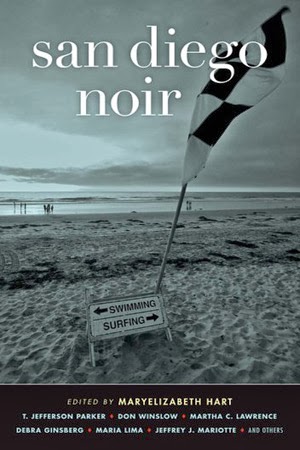
The only disappointment in this anthology is that there were no noir stories set in my Chula Vista. Other than that, an admirable entry in the long-running series of geographically themed noir.


I only knew Donald Keyhoe through his popular writings about UFO's, so I was very surprised to find out he was a very prolific writer during the pulp era. These books were very enjoyable and revealed very strange aspects to the Great War.


In The Island of Lost Maps, we find a terrible sort of criminal, terrible at least to bibliophiles, for it centers on those who travel from library to library, ripping maps from rare books to sell to collectors.

Certainly not all the books I read in 2013, or even a fair representation, but just a few of the books I enjoyed most. And quite a few of them made their way to me through the Good Reads website in the form of suggestions made because of others books I read. If you don't already belong, you might want to consider it. It has suggestions, forums, giveaways...but more than that, it's fun.

Thursday, September 6, 2012

-30-

It's been a couple of years since I last ranted about the evils of Kindle (ebooks and ebook readers in general) and predicted the end of civilization. Since then, nothing that has happened in the publishing world at large has changed my mind. If anything, the facts and figures streaming from the experts arouse my Inner Luddite to new wrath.

From 2010 to 2011, the number of ebook titles published increased 202%; for just the first six months of 2012, the increase from 2011 is 177%. At the same time, while hardcovers have managed to maintain their usual moribund sales rate (in dollars, but not units), sales of all paperback books fell more than 30%. As for the publishers' bottom lines, ebooks are becoming ever more important. Hatchette now counts on ebooks for 21% of its income, while Simon & Schuster rely on them for 17% of revenue and Penguin Books 14%; Chicago-based independent publisher Sourcebooks gets 28% of its annual sales from ebooks, British publisher Bloomsbury gets 38% of its income from electronic books, and even staid and conservative academic publisher John Wiley & Sons (founded 1807) relies on ebooks for 11% of its sales.

While I view this flight from the printed page with a mixture of alarm, disgust, terror and dismay, seeing within this trend the death of literacy, the end of libraries (public & private) and the rise of a new Dark Age, my sometimes writing partner for this blog, Arimintha, who lives and writes in Los Angeles, claims I am totally overreacting. She explains to me (as one might to a child afraid of the darkness, I suppose) that reading is not dying, but evolving, much as books themselves are evolving. Just as books replaced papyrus scrolls and clay tablets because they were a better medium for the information, so printed books are giving way to their electronic scions. She assures me people will not read less because of the change to electronic format, but will read more due to the huge number of free and low-cost ebooks, the ease of downloading files, and attraction of carrying a library in the palm of one's hand.

Loath as I am to admit it, she may have something there. According to Amazon, which dominates ebook retail sales in a way no other distributor can, their average customer buys "books" 3.3 times more often after buying a Kindle than before purchasing the infernal device. More than half (53%) of ebook buyers claim they read more often because of the ease and low cost of the new format.

Arimintha also informs me that many new books, especially textbooks she needs for her studies, are only available in non-print editions. And the Wife tells me that her Romance books are moving toward electronic predominance, especially in the reissue of older titles. As I mentioned earlier, thousands of ebooks are free to download through Many Books, Amazon, The Gutenberg Project, and Google Books, many of them facsimiles or new editions of rare books that would cost you thousands of dollars...if you could find them. However, we should be clear here: neither the ease nor the economy nor the ubiquitousness of electronic books lessen their danger to civilization. Like every technological wonder that was supposed to make life easier and bring the jubilee, electronic books carry with them the seeds of cultural calamity, the end of books as an art form, and a cheapening of the written word.


Perhaps the reason I harbor such resentment to the electronic form (yes, I realize and appreciate the irony of lamenting the end of civilization while writing on a laptop and posting to the Internet) is the comfort I've received over the decades from holding a book in my hand, in curling up with a book on a rainy day or in a silent house, in being surrounded by stacks of books, in having well-filled bookcases in every room, in the acquisition of a rare book or a book that represents the apex of the bookmaker's craft. Can you get all that from a reader?


Consider also the dependency represented by electronic books. "No, I can't show you my book collection because my Kindle is recharging," says a character in a cartoon I saw a year or so ago. Batteries and plugs. And, beyond that, oil, coal, natural gas, light-reactive chemicals, atomic-powered steam turbines, and bird-chopping wind farms. Today's batteries may be light-years beyond Count Alessandro Volta's first galvanic cell, but after 30 hours you're looking for the nearest wall outlet. According to a report by Pricewaterhouse Cooper, by 2016 more than 50% of books purchased worldwide will be ebooks, and that figure will be even higher in North America. Currently about 30% of the population owns some kind of ebook device, but even now that number is increasingly as the number of electronic devices capable of displaying ebooks (from dedicated readers to pads to phones) proliferate exponentially.

One day, the lights will go out, one by one, all over the world, and long before that the cost of electrical energy will skyrocket, either by design or through the natural depletion of resources. Not today. Not tomorrow. Probably not even the day after tomorrow. But someday. And then you can use your Kindle as a paperweight...while I light a candle.