Showing posts with label Golden Press. Show all posts

Thursday, September 12, 2013

Agent X and Operative 3 On The Job


The library at J. Calvin Lauderbach Elementary School in Chula Vista did not have, at first glance, much going for it. Contained in a single room, with shelves around the walls and two free-standing shelves in the middle, it was not much bigger than the library at my former school, Highland Elementary in National City, which I considered tiny, shoved, as it was, into a storage room behind the auditorium. But being a bibliophile even at that age, I had to look around, see what I could carry home...after checking it out, of course. I found the usual science books and children's classics, history books and a few art books, but I found something in abundance that had been lacking at Highland. Either Lauderbach's librarian was a kid at heart, was a kid's best friend, or knew the best donor in the world -- I found complete sets of Tom Swift Jr, the Hardy Boys, Nancy Drew, Rick Brant, the Power Boys, Ellery Queen Jr...and Brains Benton.

Brains Benton? Who? Well, if you don't know who that is and you grew up in the middle of the last century, I just don't know how to explain it. Barclay "Brains" Benton (X) and Jimmy Carson (Operative 3) were the young teen owners of the Benton & Carson International Detective Agency, headquartered in the seemingly quiet Midwestern town of Crestwood. Lest you think the "International" was just a piece of grandiose flummery by the young sleuths, they did manage to save a foreign kingdom in The Case of the Roving Rolls. In other tales they solve a mysterious message ("The kangaroos have escaped"), stop a gang of rare coin counterfeiters, and recover $5,000 ($85,000 in today's devalued cash) stolen from the town.


Although the series lasted only three years, the brainchild of Charles Spain Verral, the series was very influential, on me at least. It was with Brains and Jimmy in mind that I formed my first detective agency in 1961, and that was when I first discovered a dichotomy between fiction and real life...fiction is much more interesting. That also came to mind almost twenty years later when I did some work for attorneys and some private detectives after college...fiction was still better, and is why I now write mysteries rather than try to unravel real-life ones. The stories are a bit dated, but not as much as others, and there is still some interest in the series, enough to cause fans start writing new cases starting in 2008. If you want to collect them, they are still relatively easy to find and are not exorbitantly expensive. Also, if you limit yourself to the original books published by Golden Press it's not hard to collect the complete set.
  1. The Case of the Missing Message (1959)
  2. The Case of the Counterfeit Coin (1960)
  3. The Case of the Stolen Dummy (1961)
  4. The Case of the Roving Rolls (1961)
  5. The Case of the Waltzing Mouse (1961)
  6. The Case of the Painted Dragon (1961)
A half-century has passed has passed since I first stepped onto the campus of Lauderbach Elementary and made my way to the library. The school has changed profoundly. Places where I played ball and tag have been covered by "temporary" classrooms for decades. English is spoken by a minority of kids. The school is completely surrounded by iron fences and locked gateways that would do a Super-Max proud. Classes no longer start with the Pledge of Allegiance. And, of course, the school library is about five times larger and well stocked with every book adults consider fit reading for children...what a shame.

Sunday, November 13, 2011

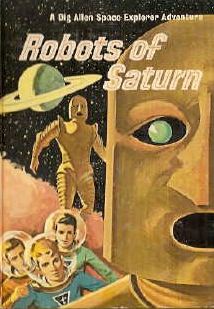
I Dug Dig Allen

When I enlisted in the military many years ago, I learned two awful truths of life:
  1. When you join the Army, you can't take anything with you but the clothes you have on, and a razor.
  2. When you're gone, there is nothing to prevent your mom from having a big yard sale.

Since my pack-rat/hoarding genes were already well developed, even at that tender age, it was a big yard sale, perhaps the biggest in Chula Vista, or so my mother joked. Yes, she joked, I wept. I returned from defending the American way of life, liberty and the pursuit of happiness to discover I was destitute of all but a few of my most prized possessions -- face it, there are just some things you can't even give away, no matter how much she tried. Gone were boxes of comic books; full runs of Analog SF, Ellery Queen's Mystery Magazine, F&SF and other magazines; sets of Edgar Allen Poe, Shakespeare and Galsworthy; board games, the earliest simulation games and lots of the old 3M Bookshelf Games; and many other acquisitions of a misspent youth. Not that I blame my mom, of course...to her (and the rest of the world) they were just stuff. Among the MIA was my collection of Dig Allen, Space Explorer books. Never heard of them? You're not alone.

Back in the middle of the last century idealism had not died, nor had the idea of American exceptionalism, and when mixed with our "Space Race" against the Soviet Union it resulted in a very optimistic, very aggressive juvenile literature focused on a future that was egalitarian and progressive, yet still retained much of the rugged individualism admired by Theodore Roosevelt. Penned by veteran writer Joseph Greene and published by Golden Press, the adventures of Digby "Dig" Allen, Space Explorer took place in a solar system that, although impossible with today's knowledge, was scientifically feasible: Venus was a jungle planet, Mars was habitable and the "twilight zone" of Mercury could be colonized. The six books which comprise the series were published from 1959 to 1962, and I remember as late as the 1970s debating that the surface of Venus could possibly be a sea of petroleum -- wouldn't that have been a downer for OPEC if true?

1959
1960

For the times, the books were plausible, and they were very exciting. Of course, juvenile series were nothing new -- the Stratmeyer Syndicate had for decades produced the likes of Nancy Drew, the Hardy Boys and others. In fact, it was hoped this new series, with its focus on space, the new frontier would be even bigger. Unfortunately, that was just not in the stars.
1961

1961

1962


Instead of hundreds of titles, we have only these six, although there is a rumor that Greene may have scripted a seventh that was never published. The books just did not sell as well as had been hoped, not enough to justify further investment by the publisher. Golden Press cut its losses and went on to other projects.

1962


Though I don't know what the print runs were, they were not large. That is why, now, if you want to collect this series, as short as it is, doing so will cost some coin. Between the Internet and EBay, you can track down anything, and it's no different with the Dig Allen series, though it may take some searching. And when you do find your copies, try not to let your jaw hit the ground. For a decent copy, it may be around $50 or so, which is rather steep considering what books in other kid-lit series can be had for. Of course, it depends upon your motivation.


Now, there is an afterword to this mawkish little foray into my lost past. Years ago, I was browsing through the Chula Vista Book Store (now long gone, unfortunately) when I spied the spine of a familiar book. I reached up, pulled it from the shelf, and was thrilled to see it was a copy of Lost City of Uranus, the sixth and final book in the series. I could start to rebuild. I called the Wife over and launched into an overlong and tedious description of the series, the plot, and why this book was important to me. As her eyes glazed over (even those who love me are not immune), I told her, "I had this book when I was a kid." She wandered off, some sort of self-preservation urge, I guess, leaving me with my new found treasure. I opened the book. Inside, written in a childish hand was...

Ralph Vaughan
Telephone: GR-4-1107